
Deep Iran News About Iran and Israel Conflict
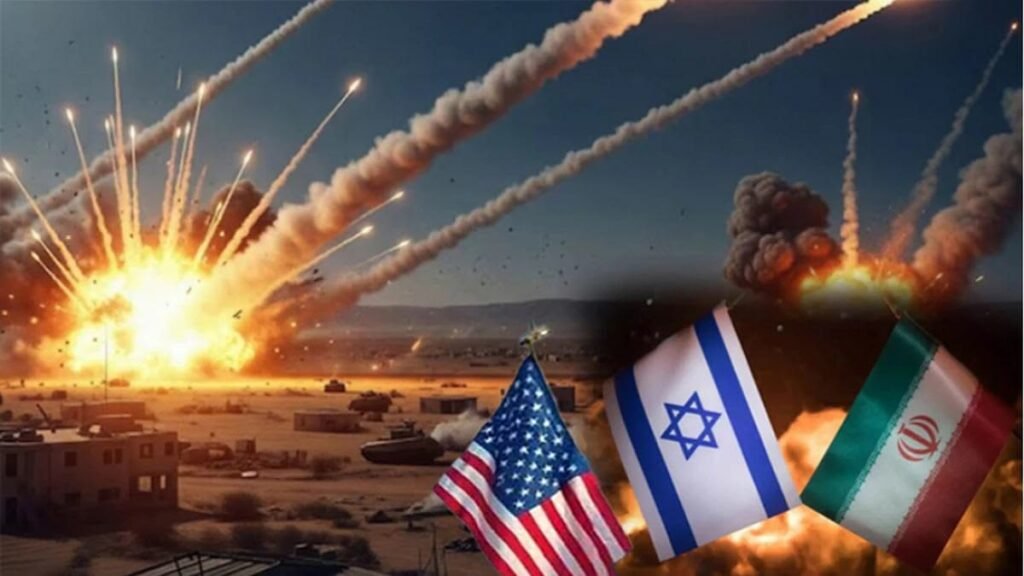
Today, Iran News attracts worldwide attention because any serious confrontation between Iran and Israel can affect much more than the two countries. For example, tensions can influence Lebanon, Syria, Iraq, Yemen, the Persian Gulf, the Red Sea, global energy markets, and international diplomacy. Moreover, the United States has a close security relationship with Israel and has important military interests across the region.
The Historical Roots of the Iran-Israel Rivalry
Relations Before the 1979 Iranian Revolution
The relationship between Iran and Israel was not always hostile.
Before the Iranian Revolution of 1979, Iran was ruled by Shah Mohammad Reza Pahlavi. During that period, Iran and Israel maintained important political, economic, and security connections.
Although the relationship was not identical to a formal alliance, both countries shared concerns about regional politics and Arab nationalism at certain points.
However, the Iranian Revolution changed the country’s foreign policy.
The new Islamic Republic rejected the previous relationship with Israel. Furthermore, Iran’s leadership adopted strong support for the Palestinian cause and opposition to Israeli control over Palestinian territories.
As a result, the relationship moved from cooperation to deep strategic hostility.
The Islamic Republic’s Position
Iran’s political system was established around an Islamic revolutionary identity.
The country’s leaders have repeatedly criticized Israel and presented support for Palestinians as an important part of Iranian foreign policy.
Consequently, opposition to Israel became closely connected with Iran’s broader foreign-policy identity.
Israel, meanwhile, came to view Iran’s government as one of its most serious long-term threats.
Over time, this rivalry expanded beyond political speeches. It entered intelligence operations, cyber activity, military planning, regional alliances, and competition over influence.
Why Iran and Israel See Each Other as Threats
The two governments have very different views of regional security.
Iran argues that Israel has expanded its military and political power in the region while denying Palestinians important rights. Iranian leaders also oppose what they describe as Western domination of Middle Eastern affairs.
Israel, on the other hand, views Iran’s nuclear activities, missile capabilities, and support for armed organizations as major security concerns.
Therefore, both sides believe that the other poses a serious danger.
This creates what analysts often describe as a security dilemma.
When one country increases its military strength because it feels threatened, the other country may interpret that action as preparation for an attack. Consequently, it responds by increasing its own military capabilities.
Iran News: The Iranian Nuclear Program
Why the Nuclear Issue Matters
Iran’s nuclear program is one of the most important parts of the conflict.
Iran says that its nuclear activities are designed for peaceful purposes, including energy production, medicine, research, and other civilian needs.
However, Israel and several Western governments have expressed concern that Iran’s technical capabilities could eventually allow it to develop a nuclear weapon.
This concern is especially important because Iran has developed advanced enrichment capabilities.
The difference between civilian nuclear technology and a potential military capability is therefore a central issue in international diplomacy.
The 2015 Nuclear Agreement
In 2015, Iran reached a major nuclear agreement with the United States, Britain, France, Germany, Russia, China, and the European Union.
The agreement, known as the Joint Comprehensive Plan of Action, placed limits on important parts of Iran’s nuclear program.
In return, Iran was promised relief from certain international sanctions.
For a period, the agreement became a major example of diplomacy between Iran and world powers.
However, the United States withdrew from the agreement in 2018 during President Donald Trump’s administration.
Afterward, Iran gradually moved beyond several limits established by the agreement.
As a result, rebuilding the original framework became increasingly difficult.
Israel’s Nuclear Concerns
Israel has repeatedly argued that Iran must not be allowed to acquire nuclear weapons.
Israeli leaders have therefore treated Iran’s nuclear program as a major national security issue.
The fear is not only about the possible existence of a nuclear weapon. Instead, Israel is also concerned that an Iranian nuclear capability could change the regional balance of power and make it more difficult for Israel to respond to threats.
Iran rejects the idea that its nuclear program is intended to produce nuclear weapons.
Consequently, the dispute remains unresolved.
Iran’s Missile and Drone Capabilities
Iran has spent decades developing missiles and drones.
These systems form an important part of Tehran’s military strategy.
Missiles can provide a way to strike targets at long distances, while drones can offer surveillance and attack capabilities.
Furthermore, relatively low-cost drones can create challenges for more expensive defense systems.
Iran has also shared or supplied various drone and missile technologies to regional partners, according to governments and international observers.
However, claims about specific weapons, locations, and battlefield results should always be checked against reliable evidence.
For readers following Iran News, this distinction is especially important because military claims can be highly political.
Israel’s Air Defense
Israel has invested heavily in air-defense systems.
These include systems designed to intercept different types of rockets, missiles, and other airborne threats.
Israel also has advanced fighter aircraft, intelligence capabilities, radar systems, and close military cooperation with the United States.
Therefore, any direct missile confrontation between Iran and Israel involves a complicated contest between offensive weapons and defensive systems.
However, no air-defense system can guarantee complete protection.
Even a small number of successful attacks can create serious damage, fear, and political pressure.
The Role of the United States in the Iran-Israel Conflict
The United States is deeply connected to the regional security situation.
Washington has maintained a close alliance with Israel for decades.
Furthermore, the United States has military forces, bases, ships, aircraft, and defense partnerships throughout the Middle East.
As a result, an Iran-Israel confrontation can quickly become a concern for American policymakers.
Why Washington Supports Israel
American support for Israel has several dimensions.
It includes military cooperation, intelligence sharing, diplomatic relationships, economic ties, and long-term strategic interests.
American policymakers also view Israel as an important regional security partner.
However, different American administrations have disagreed about how strongly the United States should become involved in conflicts involving Iran.
Some policymakers emphasize deterrence and military strength. Others place greater emphasis on diplomacy and avoiding another major Middle Eastern war.
The Risk to American Forces
Iran and armed groups linked to Iran have the ability to threaten American interests in the region.
American military personnel and facilities have faced attacks from regional armed groups at different times.
Therefore, a serious Iran-Israel confrontation could create pressure on Washington to respond if American personnel or facilities were attacked.
At the same time, the United States has strong reasons to prevent an uncontrolled regional conflict.
This creates a difficult strategic balance.
Iran’s Regional Relationships
Iran does not operate in the Middle East as an isolated country.
It has developed relationships with governments, political organizations, and armed groups across the region.
These relationships are sometimes described as the Iranian regional network or “Axis of Resistance.”
Iran argues that these relationships help resist Israeli and American influence.
Israel and the United States, however, argue that Iran uses these relationships to expand its military reach.
Therefore, the same network is viewed very differently depending on the political perspective.
Hezbollah in Lebanon
Hezbollah is one of the most important groups connected to Iran.
It is a powerful political and armed organization in Lebanon.
Hezbollah and Israel have fought several conflicts and have continued to experience serious tensions.
Israel considers Hezbollah a major security threat because of its large military capability and location close to Israel’s northern border.
For Iran, Hezbollah represents an important regional partner.
Consequently, any major Iran-Israel conflict creates concern that fighting could spread into Lebanon.
Groups in Iraq
Several Iraqi armed groups have close relationships with Iran.
Iraq itself, however, has its own national interests.
The Iraqi government has strong relations with Iran while also maintaining important ties with the United States and other countries.
Therefore, Baghdad faces a difficult balancing act.
Iraq does not want its territory to become the battlefield for a larger Iran-US confrontation.
Nevertheless, regional escalation can create pressure inside Iraq.
Syria
Syria has also been an important part of Iran’s regional strategy.
Iran supported the Syrian government during the civil war.
Israel, meanwhile, has conducted military operations in Syria against targets it says are connected to Iran or Iranian-backed forces.
This has made Syria another important location in the wider Iran-Israel rivalry.
Yemen and the Houthis
The Houthi movement in Yemen has developed close relations with Iran.
The group has become especially important because of attacks involving shipping in the Red Sea during periods of regional tension.
These attacks have created concerns for global trade.
Consequently, the Iran-Israel conflict can have economic effects far beyond the borders of the Middle East.
The Palestinian Issue and Iran

The Palestinian question is central to Iran’s foreign policy.
Iran strongly supports Palestinian political rights and has consistently criticized Israel’s treatment of Palestinians.
Iran also supports Palestinian armed groups, several of which are designated terrorist organizations by the United States, Israel, and other governments.
Israel argues that these groups threaten its citizens.
Iran, however, describes its support as part of resistance to Israeli occupation and regional domination.
This difference in language is important.
A responsible report should explain what each side says rather than presenting political claims as established facts.
At the same time, civilian suffering should remain at the center of any discussion.
Palestinian civilians and Israeli civilians have both experienced violence, displacement, fear, and loss.
The Human Cost of War
Military analysis often focuses on weapons and strategy.
However, war is ultimately experienced by people.
Families can lose their homes. Hospitals can become overloaded. Children can lose access to education. Businesses can close, while roads, power systems, and water networks can be damaged.
Furthermore, people may be forced to leave their communities.
Therefore, discussions about Israel Iran News should not focus only on missiles, aircraft, military bases, and political speeches.
The human cost is equally important.
It is also important to distinguish between governments and ordinary people.
Iranian citizens should not be treated as responsible for every decision made by Iran’s government.
Likewise, Israeli civilians should not be blamed for every action taken by Israel’s government.
The same principle applies to Americans, Palestinians, Lebanese, Iraqis, Syrians, and Yemenis.
Iran News: An Islamic Perspective on the Conflict
Justice in Islam
Islam places great importance on justice.
The Quran instructs believers to stand firmly for justice, even when dealing with people they dislike.
Therefore, Muslims discussing the Iran-Israel conflict should avoid double standards.
If attacks against civilians are wrong when committed by one side, they should also be considered wrong when committed by another side.
This principle provides an important moral foundation for discussing war.
Protection of Innocent People
Islamic legal traditions contain principles concerning warfare and the protection of noncombatants.
The deliberate killing of innocent civilians cannot simply be justified by political anger.
Therefore, an Islamic approach to the Middle East crisis should emphasize protection of human life and humane treatment.
At the same time, supporting justice for Palestinians or defending a country’s security does not require hatred toward an entire nation or religious community.
Avoiding Religious Hatred
The Middle East contains many religious communities.
There are Sunni Muslims, Shia Muslims, Christians, Jews, Druze, Yazidis, and others.
Therefore, the Iran-Israel conflict should not be described as a simple religious war.
Political interests, national identity, geography, military strategy, economics, and history all play important roles.
Furthermore, Jews should not be collectively blamed for Israeli government policy, just as Muslims should not be collectively blamed for the actions of any Muslim-majority government or organization.
This distinction is essential for responsible reporting.
Iran News: The Economic Impact of the Conflict
The Iran-Israel rivalry also matters because of the region’s energy resources.
Iran has enormous oil and natural gas reserves.
The Persian Gulf is one of the world’s most important energy-producing regions.
Consequently, serious instability can affect energy prices and international markets.
The Strait of Hormuz
The Strait of Hormuz is especially important.
It connects the Persian Gulf with the Gulf of Oman and the Arabian Sea.
Large volumes of energy products pass through this narrow waterway.
Therefore, any major military crisis around the Strait can create global concern.
However, claims that the waterway has been closed or completely blocked should always be verified carefully.
Such claims can have major effects on financial markets and public opinion.
Global Shipping
The Red Sea is another important route.
When security conditions deteriorate, shipping companies may choose longer routes to reduce risk.
Consequently, transportation costs can rise.
Longer journeys can also affect delivery times and insurance costs.
Therefore, Middle Eastern military tensions can influence consumers and businesses around the world.
Conclusion
Instead, it is the result of decades of political change, strategic rivalry, military competition, nuclear concerns, regional alliances, and unresolved questions surrounding Israel and Palestine.
For that reason, Iran News should be understood within its wider historical and political context.
Iran sees itself as a major regional power with the right to defend its interests and oppose what it considers foreign domination. Israel sees Iran as a serious strategic threat and focuses strongly on preventing hostile military and nuclear capabilities from becoming more powerful.